Chemistry experiment 30 - HCl fountain
Август 17, 2014
Hydrogen chloride (HCl) is highly soluble in water. A solution of hydrochloric acid is formed.
Hazards: — HCl is poisonous and irritating. — Hydrochgloric acid is corrosive
466 26
86,740 просмотров
HCL - Hydrochloric Acid || ICSE CLASS 10 CHEMISTRY ||
To support me in my journey you can donate (Paytm@ 9161123482) or
Alakh Pandey, Bank of Baroda, Rajrooppur, Allahabad, U.P
IFSC: BARB0RAJROO Account No: 19210100020819
A small amount of Rs 100 even will be of great help.
Follow us on:
Instagram https://www.instagram.com/physicswallah/
Facebook: https://www.facebook.com/physicswallah
HCL — Hydrochloric Acid || ICSE CLASS 10 CHEMISTRY ||
https://youtu.be/ISPhUbvcsGM
Ammonia | Ammonia ICSE 10 CHEMISTRY | Preparation and Properties of Ammonia | 10 ICSE |
https://youtu.be/Nnj3lgbYCKE
NITRIC ACID : ICSE CLASS 10, ISC Class 12 (P Block)
https://youtu.be/ZsbMX_W8Sd0
Sulphuric Acid : ICSE Class 10, ISC Class 12 (P Block)
https://youtu.be/5mxuH04fICI
2468 56

7 minutes of joy with Chemistry experiments
00:30 Whoosh Bottle
01:31 Chemical Cut
02:20 Gini in a bottle
3:45 Iodine Clock
05:16 Can Implosion
05:59 Dancing Green Blue Flames
Our annual video, shot mainly during the last day of lessons. Our team, mostly freshmen, demonstrates new experiments in front of their excited classmates. Enjoy Part Α!
Το καθιερωμένο μας πλέον βίντεο γυρισμένο κυρίως κατά την τελευταία ημέρα των μαθημάτων. Η ανανεωμένη, φετινή ομάδα εκτελεί νέα πειράματα μπροστά στους ενθουσιασμένους μαθητές της Α Λυκείου. Απολαύστε το πρώτο μέρος των πειραμάτων.
Kool Kats by Kevin MacLeod is licensed under a Creative Commons Attribution license (https://creativecommons.org/licenses/by/4.0/)
Source: http://incompetech.com/music/royalty-free/index.html?isrc=USUAN1100601
Artist: http://incompetech.com/
11900 534

Chemie: Springbrunnenversuch 2-36 min
Am 9.7.2012 war dieser Versuch nicht so kraftvoll gelungen, wie das möglich ist. Also wurde vor Unterrichtsbeginn am 12.7. geschaut, was da zu verbessern ist. Nur wenige "early bird catches the worm" Schüler waren anwesend, als die hier gefilmte Version lief.
57 7

Losing fingers to chemistry - Periodic Table of Videos
The Prof is back in the lab with a Potassium Dichromate reaction and a story of lost fingers!
More chemistry at http://www.periodicvideos.com/
Follow us on Facebook at http://www.facebook.com/periodicvideos
And on Twitter at http://twitter.com/periodicvideos
From the School of Chemistry at The University of Nottingham: http://www.nottingham.ac.uk/chemistry/index.aspx
Periodic Videos films are by video journalist Brady Haran: http://www.bradyharan.com/
Brady's other channels include:
http://www.youtube.com/sixtysymbols (Physics and astronomy)
http://www.youtube.com/numberphile (Numbers and maths)
http://www.youtube.com/DeepSkyVideos (Space stuff)
http://www.youtube.com/nottinghamscience (Science and behind the scenes)
http://www.youtube.com/foodskey (Food science)
http://www.youtube.com/BackstageScience (Big science facilities)
http://www.youtube.com/favscientist (Favourite scientists)
http://www.youtube.com/bibledex (Academic look at the Bible)
http://www.youtube.com/wordsoftheworld (Modern language and culture)
http://www.youtube.com/PhilosophyFile (Philosophy stuff)
19138 414
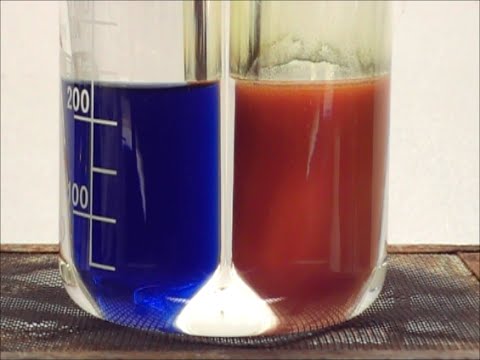
Chemistry experiment 33 - Fehling's test
This video shows how to make Fehling's solution, which can be used to test for the presence of glucose.
Fehling's A: copper(II) sulfate solution.
Fehling's B: potassium sodium tartrate and sodium hydroxide solution.
Poured together: Fehling's solution.
399 22
Sulfuric ACID (H2SO4) VS MENTOS! 7 UNBELIEVABLE EXPERIMENTS
Let's continue our TOXIC Experiments!
Please BE MINDFUL and DO NOT TRY TO REPEAT THAT IN HOME!
TIMESTAMPS ARE HERE CLICK-CLICK!!
00:00 SULFURIC ACID VS WATER
01:30 ACID MILK
02:26 H2SO4 VS EGG
04:22 ACID VS YOLK
05:22 FOOD COLORING VS SULFIRIC ACID
06:28 MENTOS VS SULFURIC ACID
08:18 WATERMELON & 2000 MATCHES VS GLOWING 1000 DEGREE METAL BALL VS SLEDGEHAMMER
18573 8173
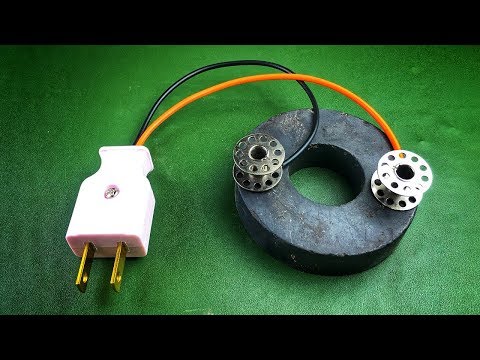
Free energy generator science electric experiment 2019
Welcome To Amazing Tech!
Now i want to show about Free energy generator science electric experiment 2019
Please don't forget subscribe YouTube channel to get more videos.
Thank you for watching, like, share, comment!
17654 4640

Chemistry experiment 29 - Copper + nitric acid fountain
Copper reacts with nitric acid, forming blue Cu2 ions. Also, a brownish mixture of nitrogen dioxide and nitric oxide gas is formed. Nitrogen dioxide reacts with water, forming nitric acid. The latter reaction causes a low pressure in the left flask. Therefore, water from the right flask is sucked into the left flask.
Hazards: — Nitric acid is corrosive. — Formed gases are very toxic.
159 6

Making Rayon Fiber - Artificial silk, chemical experiment!
Attention! This experiment should be done in well ventilated area or in a fume hood!
Hello everyone. Today, we will conduct a very interesting experiment, which is called making a rayon or an artificial silk production.
We will need a basic copper carbonate for this experiment.
The substance forms by copper sulfate and baking soda by reacting with each other.
Take a beaker and pour into it about 4 grams of basic copper carbonate.
Copper carbonate has greenish tint.
Next, we need a concentrated solution of ammonia. Here I have approximately 40 ml of 25% ammonia solution.
Now I will pour this ammonia solution to the copper carbonate.
This forms a complex compound of copper, which has a bright blue color.
However, copper carbonate doesn't entirely react with ammonia and a little residue remains at the bottom of the cup.
Let's pour the liquid into the other beaker for the solution to become clear.
Now we have a copper compound complex, which has very interesting properties.
This solution can dissolve cotton wool.
To do this, I'm taking about a gram of the cotton wool and begin to add it slowly to the copper complex solution.
The wool is highly soluble and forms so-called viscose, which is the raw material for the production of artificial silk.
After the wool has been dissolved, the liquid, which was in the cup, has become quite thick.
To obtain the artificial silk, prepare one molar solution of a sulfuric acid.
Next, we fill the syringe with a few ml of viscose, fit the needle and slowly inject a stream of viscose into the acid solution.
At the same time we can observe an interesting effect.
When viscose contacts with sulfuric acid, the cellulose from the solution begins to polymerize.
Sulfuric acid reacts with complex compound of copper and dissolves it.
Thin blue fibers of rayon are formed.
After some time, sulfuric acid reacts with the complex compound and washes out the copper salts from the fibers. Fibers become colorless.
After that, our fibers are bleached and now we can find out how they feel.
To the touch, the fibers are very soft and they easily tear. This is due to the fact, that I used a too thick needle.
Now I pour the rest of the viscose into the sulfuric acid solution.
Something similar to vermicelli but with a blue color is formed. These fibers will also become colorless within time, but they will be less durable than a fiber extruded through the needle.
The solution eventually acquires a blue color because of the copper sulfate and carbon dioxide being formed. Facebook: https://www.facebook.com/thoisoi2
Patreon: https://www.patreon.com/Thoisoi?ty=h
Music: http://audiomicro.com
4287 174

HCI + H2O Hydrogen chloride and water המסת חומצת מימן כלורי במים
HCI H2O Hydrogen chloride and water form Hydrochloric acid
המסת חומצת מימן כלורי במים
צפייה בסמארטפונים והסבר מלא בקישור: http://goo.gl/GdpdN
הסרט הוא חלק מסדרה של ניסויים אינטראקטיבים בנושא "חומצה בסיס", הסידרה כוללת את כל תגובות החומצה-בסיס הנלמדות במסגרת הבגרות בכימיה בתיכון בישראל — ליחצו על ההערות המופיעות במהלך הסרט כדי לעבור בין הסרטים והניסויים המצולמים
רעיון: ד"ר אבי סאייג — מכון דוידסון לחינוך מדעי, מכון ויצמן למדע
פיתוח והפקה: ד"ר אבי סאייג, ד"ר מלכה יאיון, מרכז מורי הכימיה הארצי, המחלקה להוראת המדעים, מכון ויצמן למדע
מציגים: ד"ר אבי סאייג, שלי רפּ — המחלקה להוראת המדעים, מכון ויצמן למדע
צילום: שגיא בר און
עריכה: צילה ביטרמן
מוזיקה:
Amazing Plan; Hustle. Kevin MacLeod — Creative Commons license, http://incompetech.com/m/c/royalty-free/
36 8
