James Levine Rehearses Falstaff (Met Opera)
Ноябрь 12, 2013
Watch a musical rehearsal for the new production of Verdi's "Falstaff" with Music Director James Levine, which opens December 6. Clip taken from the Live in HD transmission of "Tosca" on November 9, 2013, hosted by Renée Fleming.
The Metropolitan Opera
2013-14 Season
357 15
71,701 просмотров

1 of 6 - American Masters - James Levine: America's Maestro
From American Masters — James Levine: America's Maestro — 1 of 6
Placido Domingo, tenor
James Morris, bass
183 9

Tutti Gabbati (everyone is fooled)
From the Met Falstaff 2013
http://www.metoperafamily.org/ondemand/catalog/search/results/index.aspx?keyword=falstaff
100 4

Britain's Got Talent 2019 Faith Tucker Opera Singer Full Auditions S13E01
If you'd like to support my channel follow me on instagram @thetonypatrony and/or https://www.patreon.com/TonyPatrony
#TonyPatrony
6883 288

Wagner's Ring Cycle Leitmotifs, Metropolitan Opera Orchestra
Taken from the Metropolitan Opera Live in HD series, members of the Metropolitan Opera Brass section explain and demonstrate Wagner's use of leitmotifs throughout his Ring Cycle.
David Krauss, Billy Hunter, Ray Riccomini, Peter Bond -trumpets
Joe Anderer, Erik Ralkse, Scott Brubaker, Michelle Baker, Javier Gandara, Brad Gemeinhardt, Anne Scharer, Barbara Currie, Julia Pilant, Tony Cecere- Horns
David Langlitz, Demian Austin, Weston Sprott, Stephen Norrell, Pat Herb- trombones
Paul Pollard- bass trumpet
Chris Hall — tuba
1153 18

The Magic Flute: "Pa-pa-pa Papageno" - Nathan Gunn (Met Opera)
(C) Copyright The Metropolitan Opera 2006. All Rights Reserved.
1212 91
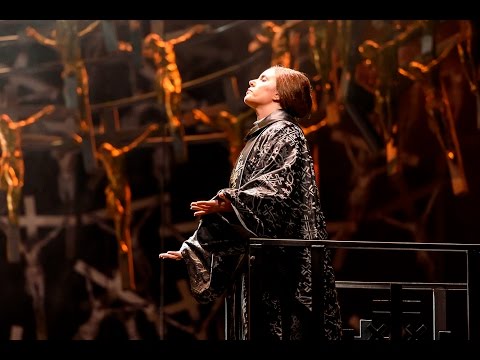
Norma – Casta diva (Sonya Yoncheva, The Royal Opera)
The priestess Norma leads her people in a prayer for peace. Sonya Yoncheva sings the title role in Bellini's masterpiece, with the Royal Opera Chorus and the Orchestra of the Royal Opera House conducted by Antonio Pappano, recorded September 2016. Find out more at http://www.roh.org.uk/norma
Bellini’s bel canto masterpiece Norma had its premiere at La Scala, Milan, on Boxing Day 1831. After a muted initial response the opera quickly became popular, and is now a mainstay of the repertory. Norma is perhaps most acclaimed as a vehicle for the lead soprano, most famously now by such 20th-century greats as Maria Callas, Montserrat Caballé and Joan Sutherland. Indeed, Bellini provides some astonishing vocal fireworks for his title character – most famously ‘Casta diva’, Norma’s Act I hymn to the chaste moon, and Act II’s ‘Dormono entrambi’, as she contemplates the unthinkable act of killing her children. But the opera’s dramatic potency rests in its breathtaking ensembles, most strikingly in Norma’s duets with Pollione and Adalgisa, the Act I trio ‘Vanne, sì: mi lascia, indegno’ and the blistering Act II finale.
This new production of Norma was The Royal Opera’s first in nearly thirty years. Directing is Àlex Ollé, of the Catalan collective La Fura dels Baus, reunited with the creative team behind his acclaimed production of Oedipe. They give Norma a contemporary setting against a backdrop of a cruel civil war, and focus on the opera’s exploration of the conflict between an individual’s own desires and those of her society – and of religion as a force for unity and for destruction.
2744 262

Andris Nelsons leads first BSO rehearsal
The maestro, wearing a black golf shirt and a boyish smile, walked onto the Symphony Hall stage Tuesday morning, spoke briefly of his excitement about arriving in Boston, and said "Let's start with Brahms."
The Andris Nelsons era could now begin.
Nelsons, 34, in town to conduct his first concerts with the orchestra since being named the Boston Symphony Orchestra's 15th music director in May, led a rehearsal filled with energy. Over two hours, Nelsons found it hard to sit on the podium stool during a run-through of Brahms's Symphony No. 3.
He smiled often as he worked through the piece, part of a program to be performed Thursday, Friday, and Saturday, which also includes works by Wagner and Mozart. There was considerable excitement at Symphony Hall before the rehearsal began, as photographers crammed into Nelson's dressing room and orchestra leaders — including concertmaster Malcolm Lowe, trustee Paul Buttenwieser, and managing director Mark Volpe — stopped by to wish him well.
"Welcome, welcome, " said Buttenwieser, a member of the search committee that selected Nelsons. "Welcome home."
Nelsons' five-year BSO contract starts next fall, so he technically was here as just another guest conductor. But the appointment meant that the week would be filled with activities fit only for the new music director. In addition to concerts, Nelsons was scheduled to attend a lunch with BSO players, a dinner hosted by trustees and overseers, and hold a press conference. He posed for his official portrait Tuesday afternoon.
He seemed up to the task, darting between activities fueled only by an ever-present cup of chamomile tea.
The BSO had been eager to hire a young, vibrant music director, particularly after coping for years with former music director James Levine's health problems, which eventually forced him to resign in 2011. But in July, a freak accident — Nelsons walked into a door late at night — left the new maestro with a concussion and forced him to cancel an appearance at Tanglewood, where he was set to conduct a performance of the Verdi Requiem.
Just last week, Nelsons had to cancel performances in London because of the flu.
Showing his playful sense of humor, Nelsons joked about those ailments repeatedly during his arrival in Boston. Monday night, only a few minutes after being picked up at Logan Airport, Nelsons took a call from artistic administrator Tony Fogg.
How are you? Fogg asked.
Nelsons, in the back seat, pretended to be hoarse, croaking out "I'm very, very sick" before breaking into laughs.
On Tuesday, he offered more than a handful of references to his July concussion and even feigned a back injury as he rose from his chair to head to the rehearsal. When it came time to conduct, though, Nelsons appeared undiminished except for an occasional cough. He focused on the music.
Eager to add a heavier tone to one section of the Brahms, Nelsons leaned over and spoke to a group of violinists.
"This is good for dramatic Rossini, " he said. "Brahms, you need to add the beard." To demonstrate a quieter, more intimate passage, Nelsons rubbed his upper arm and said, "goosebumps." He compared other musical moments to rocking a baby and having a toothache. The players responded with chuckles, as if charmed by his approach. They played passionately through the piece, with its lush, richly melodic swirls.
Nelsons conducted with his typical level of physical intensity.
He sang, sometimes almost shouting the notes. When he sat on his stool, it wasn't to relax but to pivot and contort his body. When standing, he darted toward the players, waving his stick and grunting in time. Nelsons even danced — if not quite as gracefully as one of his favorite pop stars, Michael Jackson, at least with the energy the BSO expects from its new musical leader. His demonstrative approach is a dramatic departure from Levine, whose gestures shrank as his body became broken down.
Nelsons, at one point, put down his stick to demonstrate a Hungarian dance, and flexed his arms in a way more familiar to fans of professional wrestling than followers of Bernard Haitink.
Red the full story here: http://b.globe.com/15EC9JU
Like us on Facebook: https://www.facebook.com/boston
Follow us on Twitter https://twitter.com/BostonDotCom
Follow us on Google https://plus.google.com/ BostonDotCom/posts
1 1

falstaff -opera completa www.arteturismoe.altervista.org
VERDI Falstaff
Ambrogio Maestri, Falstaff
Roberto Frontali, Ford
Juan Diego Florez, Fenton
Ernesto Gavazzi, Doctor Cajus
Paolo Barbacini, Bardolfo
Luigi Roni, Pistola
Barbara Frittoli, Alice Ford
Inva Mula, Nanetta
Bernadette Manca di Nizza, Mrs Quickly
Anna Caterina Antonacci, Meg Page
Walter Valdi, taverniere
Ilaria Canova, Robin, le Page de Falstaff
Orchestre et Chœurs de la Scala – Riccardo MUTI
Chef des chœurs Roberto GABBIANI
Festival Verdi Busseto 4 octobre 2001anna caterina
722 58

Jonas Kaufmann and Kristīne Opolais rehearse Manon Lescaut (The Royal Opera)
Conductor Antonio Pappano rehearses with Kristīne Opolais (Manon) and Jonas Kaufmann (Des Grieux), who are both making role debuts in Jonathan Kent's new production of Manon Lescaut. Watch them in rehearsals, and discussing the nuances of Puccini's score.
Jonathan Kent's new production of Manon Lescaut was relayed live in cinemas across the world on 24 June 2014.
* * * *
Puccini's publisher tried to prevent him from adapting Abbé Prévost's L'Histoire du chevalier des Grieux et de Manon Lescaut — Massenet had already created a highly successful opera based on the novel. But Puccini was not to be dissuaded, claiming 'a woman like Manon can have more than one lover'. Despite a troubled gestation (five librettists were engaged in the project), the premiere of Manon Lescaut in 1893 was Puccini's first major triumph — a hit with critics and the public alike.
Jonathan Kent — director of The Royal Opera's much-loved staging of Tosca — brings a new production of Manon Lescaut to Covent Garden. Puccini's sumptuous, richly-coloured score is characterized by youthful vitality and filled with glorious melodies. Des Grieux expresses his passion for Manon in the Act I aria 'Vedete? io son fedele', lively dances evoke Manon's luxurious life in Paris in Act II, while in the impassioned finale to Act III, 'Pazza son!', Des Grieux begs to be allowed to join the imprisoned Manon on her voyage to America. The opera culminates in Manon's heartbreaking Act IV aria 'Sola, perduta, abbandonata', as she contemplates her impending death.
748 45
