Six Family Boxing system of Tianzhu's Dong people
Февраль 13, 2016
Liu Jia Quan "Six Family Boxing" is practiced by members of the Dong* ethnic group living in Ganxi Stronghold, located in Duma township, Tianzhou County, Qiandongnan Miao and Dong autonomous prefecture in Guizhou province.
According to local traditions martial arts have been practiced by the people of Ganxi Zhai* since the settling of the village in the reign of emperor Hongwu founder of the Ming dynasty.
The style gets it's name from the six main clans of Ganxi Zhai, each of which was said to have developed their own martial specialty.
According to tradition in the early years of the village the people were very poor with only a small amount of livestock and were rarely able to eat meat. The few pigs they had were saved for holidays to be used as sacrifices.
At one point their pigs began to rapidly disappear from their pen at night. The local people got together and organized an armed watch over the pigs.
That night several men spread out into the area around the pig pen to look for the culprit. As they stood watch they suddenly heard loud terrified squeals coming from the pig pen. The squeals of the pigs and yells of the men woke the rest of the villager who all came running carrying spears, pitchforks, and polearms. The men followed the noise and cornered a very large old one eyed tiger holding a freshly killed pig in it's mouth*. In their anger over the slaughter of their pigs the villagers all rushed on the tiger with their spears, forks, and polearms. The tiger attacked back swatting aside the weapons and throwing men to the ground. Coming to their senses the villagers scattered and ran.
The next morning they checked the pen to find that all but the old mother hog had been killed.
Of the men who had surrounded the tiger, many had broken bones, been knocked unconscious or had deep gashes from the tigers claws. But miraculously no one had been killed.
The heads of the village called a meeting, it was decided that each family should take their best young fighters and spend the next year perfecting their skills. When the year was up they would all meet as a village and share their best skills in order to better be able to deal with future threats.
This was the birth of Ganxi's Six Family Boxing system.
A few years later the night watchmen spotted four tigers approaching the pig pen and sounded the alarm. Ten men rushed out with spears and forks and swiftly killed one of the tigers while the other 3 tigers fled. That night the people of the village celebrated, drinking wine and feasting on tiger meat.
The next morning every person from the village took a piece of the tiger's skin and nailed it to one of the trees surrounding the village to warn away other predators.
After this the village successfully faced predators and bandits many times, often capturing bandits to hand over to the authorities.
Because of the reputation they gained facing bandits and predators, their martial arts became famous throughout the Dong and Miao strongholds of Qiandongnan and many people came to Ganxi Stronghold to learn the Six Family martial arts in order to defend their own villages.
The six clans of Ganxi Zhai are the Lu, Tao, Chen, Yang, Yuan, and Song. They specialized in Dragon, Tiger, Snake, Leopard, Eagle, and Monkey methods respectively.
The old saying in the village on the skills of the six clans goes:
"The Lu clan's Dragon boxing is strong and ferocious, it's fists crush boulders.
The Tao clan's Tiger pounce is sudden and swift, it's palms splinter bamboo.
The Chen clan's alert Snake flicks it's tongue, it's finger thrust pierces bricks.
The Yang clan's Leopard rushes like a thunder clap, it's leg sweep snaps tree trunks.
The Yuan clan's Eagle soars in the skies, it's claws reduce stumps to splinters.
The Song clan's body is flexible and agile, it climbs trees like a Monkey."
As with most traditional martial arts a wide variety of weapons are practiced in Ganxi village. In addition to the standard weapons seen in most Chinese martial arts the villagers are known for their skills with Tie Chi "Iron Rulers", Yue Ya Tang "Crescent Moon Polearm" (Fork) (a weapon closely associated with the Dong people who use a shorter than average version), and especially for their Hong Men Staff system.
*The Dong or Kam people speak a language from the Rau branch of northern Tai languages. Having no written language their mythology is passed down by story keepers in a collection of epic songs detailing their lineage, history and mythology. During the Ming and Qing the Dong people took part in several uprisings.
*(Ganxi Zhai is literally translated as "Sweet Creek Stronghold"
The term Zhai meaning "Stockade" or "Stronghold" is a commonly used term for local ethnic minority villages in the more remote mountain areas of western China, which were often built with defense in mind.)
*most tigers who habitually prey on humans or livestock are old, sick, or injured tigers who have become too slow to hunt effectively.
25 0
2,732 просмотров

Chinese Village Learns Kung Fu For Protection From Wild Animals
Some residents of the Chinese village of Gonghe say they learned Kung Fu to protect themselves from wild animals.
106 15

Fujian Single Whip Luohan and Tiger Boxing of Pingnan county
Pingnan county Dan Bian Luohan Quan and Hu Zun Quan*
Short clip featuring Zhang Zunmang, 6th generation inheritor of the Single Whip Luohan system demonstrating some of the acupoint striking methods from the "Iron Head Monk's Book of Meridians" which is held by the Zhang clan of Jitou village. Also showing some of the varied weapons practiced within the Hu Zun Quan system of Jixia village's Gang clan.
The Dan Bian Luohan Quan "Single Whip Luohan Boxing" style of Jitou village in Tangkou township of Pingnan county has a rich oral mythology tracing it's origins back to the Tie Tou Heshang "Iron Head Monk".
The Tie Tou Heshang is a famous character in local folktales and is one of the "Five Iron Ancestors". These are a Fujian folk version of the Shaolin Five Ancestors and predate the Five Ancestors of late 19th and early 20th century Wuxia fiction which are found in the oral mythology of many Guangdong martial arts.
According to Jitou traditions, after the burning of the Shaolin temple in Quanzhou, the Iron Head monk was hiding in Tangkou township's Shanfeng temple.
While there he became friends with Zhang Zongbiao, an aspiring scholar from nearby Jitou village.
Zhang would come to talk with the Iron Head monk whenever he passed the temple and soon they became friends, although the Iron Head Monk never talked about himself or mentioned his past. One day when returning from the city with a load of rice for his family he stopped at the temple to talk. while talking he noticed that a heavy fog had fallen so that he could only see a few feet ahead. At this time there was an old tiger in the area who was blind in one eye and had taken to preying on local villagers. Because of the poor visibility Zhang was scared to walk home lest he stumble on the tiger without seeing him.
Hearing this the Iron Head Monk just laughed and said he would walk him home and keep him safe.
Halfway to Jitou village the old one eyed tiger leaped out from the fog. Zhang was to scared to move, but the Iron head monk stepped in front of him yelling "I do not approve of your killing and I won't let you continue although as a monk I cannot take you life". Saying this he grabbed the tiger as it leaped at him and threw it off the path down the steep mountainside.
Zhang was amazed at this never having known of his friend's skills. Seeing this display of prowess he decided to quite studying as a scholar and to learn martial arts.
At Zhang's request the Iron Head monk moved from Shanfeng temple to nearby Ciyin temple which was located directly on the outskirts of Jitou village. There he instructed Zhang Zongbiao and the other villagers in the methods of the Single Whip Luohan system. He also taught Zhang Zonbiao the secret methods of acupoint striking leaving him his handwritten Mai Shu (Meridian Book). Later Zhang passed the local martial exams and was appointed to teach local troops in Jianning county in Sanming prefecture. There he taught many people and gained a great reputation through defeating his many challengers.
Over time the system was passed to different villages in northern Fujian and spread widely especially around Tangkou township.
Today the methods are still being passed within the Zhang clan of Jitou village who retain the full acupoint striking system and keep copies of the acupoint manual left by the Iron Head monk.
Also shown on this clip is the Hu Zun Quan of Jixia village in Gantang township of Pingnan. This style has been passed in the village since the mid 18th century. The local accounts claim this style originated in Quanzhou and attempt to trace the origins to a famous 3rd generation Yongchun Crane boxer. However it is now thought that it was brought from Yongtai in Fuzhou Where Huzun originated by a relative of the founder of one of the two major branches. Jixia village was also home to Gang Guobao, one of Fujian's most famous Qing dynasty generals, who was famous for his martial skills. Gang Guobao predates the arrival of Huzun based on the dates of either of the possible transmitters, although some local tales talk of him practicing it. However he was known to have taught his family his martial skills, so the Gang family of Jixia were already skilled martial artists before the Huzun transmission. Gang Guobao was also a famous painter, known especially for his tiger paintings, earning him the name of the "Tiger General". To learn more about this style look up the Jixia Hu Zun Quan video I previously posted.
21 0
![[AE] The really Kung Fu in China village](https://i.ytimg.com/vi/lhGP_w1B6yk/hqdefault.jpg)
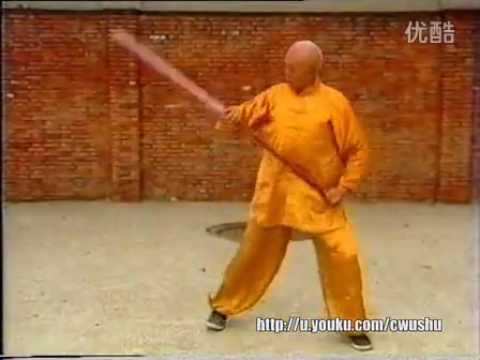
Weapons Master Xu Shoukang of Jiangsu
Xu Shoukang of Wuxi prefecture in southern Jiangsu was famous for having the widest knowledge of the traditional arts from the area around the northern borders of lake Taihu.
He was also well known for his love of weapons and mastery of a wide range of forms and practices with a wide range of rare ancient weapons.
He taught many of the current generation of senior masters in Wuxi prefecture and his arts are still being passed on by well known teachers such as his son Xu Yonggen and his students such as Yu Rongqing and Sun Yaoqi.
Xu Yonggen now holds classes in Taihu park where he publicly teaches his fathers martial arts to the people of Wuxi. Several of his fathers other students also regularly come to these classes to practice together and to help teach the next generation.
Sun Yaoqi is a regular teacher at these classes as well as having students of his own. He is known locally as Tie Guai Sun "Iron Crutch Sun" for his love of various types of Guai taught to him by master Xu Shoukang. These include Shi Zi Guai "Cross Shaped Crutch", Bu Zi Guai "Forked Branch Shaped Crutch", Yang Jue Guai "Sheep Horn Crutch", and Li Gong Guai "Master Li's Crutch" (referring to Iron Crutch Li, one of the mythical eight Immortals) among others.
Yu Rongqing has been teaching martial arts to local Wushu teams since the early 1960's. He is the inheritor of Fu Jianquan's family tradition of Shaolin Boxing from Tianjin as well as Xu Shoukang's tradition of local Jiangsu martial skills and weapons. He is vice chairperson of the Wuxi Martial Arts Association.
(Fu Jianquan was a very famous Xingyi master from Tianjin. During the 1950's he lived in Wuxi before returning to Tianjin because of political circumstances.)
The forms shown in this video are:
1. Meihua Shiba Jiang "Plum Blossom Eighteen Oar", demonstrated by Xu Shoukang
This is one of many local forms which use the boat oar as a weapon. This was quite common in many coastal and river areas of China and is recorded in old records of fights and disturbances as well as early works of martial fiction such as "The Water Margin". The area around Lake Taihu and the Yangtze delta is covered in lakes and marshes and crisscrossed by rivers, streams, and canals. In this area the boat is the main method of transportation and oar forms are especially common in local arts.
2. Li Gong Guai "Master Li's Crutch", demonstrated by Xu Shoukang
This refers to Li Tie Guai "Iron Crutch Li" of the mythical Eight Immortals.
3. Liao Wang Dao "Liao King Knife", demonstrated by Xu Yonggen, the name has the implication of Knife which rules over the Liao.
The form uses a weapon which has a striking similarity to the Song dynasty Yue Fei Dao.
The name " Liao Wang Dao " also seems to suggest this connection to Yue Fei.
Liao in this case likely referring to the Liao region (Liaoning) or to Manchuria in general.
Both the Khitans and the Jurchens were Manchurian people from the Liao and Amur River basin respectively. The Khitan Liao dynasty had it's capitol in the Liao region before it was conquered by the Jurchen, their neighbors to the north, forcing the Khitans into Inner Mongolia and Mongolia. The Jurchen then set up their own Jin dynasty empire eventually moving their capitol south to the site of the Khitans capitol in the Liao region.
Yue Fei became famous for his many victories against the Jurchen Jin empire. At the time the Jin had already taken over most of northern China and until Yue Fei took command none of the Chinese armies had been able to mount a successful military opposition and regularly defeat the Jin armies in battle.
The Yue Fei Dao was one of the weapons he created to help with his various tactics against the mounted Jin army.
28 1

Martial arts of the Zhuang people of Jinshan village, Guangxi
Jinshan village is located in Nameng township, Qinbei district, of Qinzhou prefecture, of the Guangxi Zhuang Autonomous region.
The Zhuang are native to Guangxi and there is evidence of Zhuang people living in Guangxi going back over 2000 years.
Located in one of the historically poorest areas of China known for it's corrupt officials and bandits, martial arts have long been practiced in Zhuang villages.
Today they are still being practiced in Jinshan village where they have formed a village boxing troop to teach the children the traditional methods.
However this short documentary instead focuses on some of the older boxers in the area who are primarily farmers living in the old poorer areas of the village.
They recount some of the villages martial history and show some of the architectural features built into the village to stop bandits.
The Zhuang people are the largest minority group in China. Their language is part of the Tai language family and they have their own system of writing which developed from written Chinese over a thousand years ago.
The native Zhuang religion is called Moism (not the same as the warring states period sect of Mo Tzu).
It is the ancient religion of Zhuang people and has many similarities with Chinese folk religion.
The main god is the creator Bu Luotuo and his wife Me Hoa (the Flower Mother). They also share some of the popular gods of Chinese folk religion such as the Dragon Kings and Tudigong (local Earth God).
The Zhuang people have a long history of rebellions against local Han Chinese officials and have historically often allied themselves with various local kingdoms that have appeared in Yunnan, northern Vietnam and northern Burma.
They also have a long history of warfare with various Yao and Miao groups who during the Ming dynasty began invading southwards into Zhuang territories looking to expand their land holdings.
During the Ming dynasty Zhuang and Yao warriors from Guangxi and western Guangdong were hired to create special combat units known as Lang Bing "Wolf Soldiers".
They were sent to the eastern and southern coastal regions to combat Wokou pirates.
They were very successful and continued to be used by the Ming to quell uprisings within China.
28 0

Fujian Wen Quan boxing forms
Wen Quan hand forms
Wai Wen Quan forms, Mei Nu Shu Fa "Beautiful Woman Combs Hair" & Gui Shou "Tortoise Hands".
Nei Wen Quan form, You Yu Bai Wei "Swimming Fish Swings Tail"
Wen Quan history
Wen Quan is practiced in Ningde prefecture's Jiaocheng district.
This style contains many boxing forms which are divided into Wai Wen Quan "Outer Wen Quan" and Nei Wen Quan "Inner Wen Quan" groupings.
Today the term Nei Wen Quan is often used for the style as a whole, especially by practitioners in the Jiaocheng district.
This style dates to the Qing / Republican era transition period and was founded by Yang Zhongchen, better known as Yang Qinhou, of Chixi town's Yangcuo neighborhood, in Ningde prefecture's Jiaocheng district.
Yang Qinhou was taught martial arts as a child by his father Yang Desheng, a local martial artist known for his strength.
According to tradition Yang Desheng had a game he would use for assessing people's skill to find martial artists better than himself to learn from. He would pinch a stack of coins between his fingers and offer them to anyone who could take them from his hand. Being renowned for his grip strength none of the local teachers were able to remove the coins.
One night a wandering monk in his 60's came begging at their door.
Yang Desheng let him inside and pulled out a large stack of coins placing them between his fingers. He offered the coins to the monk if he could remove them from his hands. The instant Yang put his hand out the monk sent the coins scattering around the room with a single finger in a blindingly fast whipping motion.
He then walked over to the family's huge earthenware mortar weighing around 100 lbs and held it in one hand with his arm stretched out straight at shoulder level for some time without showing any sign of strain or effort.
Seeing his skill and strength Yang Desheng begged the monk to teach him and his son.
The monk stayed with the Yang family for 3 years spending each day training Yang Desheng and his son Yang Qinhou.
The martial arts practiced by the monk focused on hand speed, evasive footwork, and smooth effortless appearing application of strength. Both his father's methods and the monk's also put a large amount of emphasis on grip strength and hand and finger conditioning.
After 3 years the monk announced he was leaving, saying he preferred to travel and had only stayed three years because he admired Yang Desheng and his son for their honesty and for how hard they practiced.
After that Yang Qinhou continued to practice the methods of his father and the monk as well as traveling around northern Fujian to visit and exchange skills with other martial artists.
He was said to have always been willing to learn and to gain new knowledge would seek out any master who he heard had a high level of skill.
He eventually became one of the most famous masters of the republican period in Ningde prefecture.
He was known for his evasive footwork and was said to have once beaten a challenger by saying that instead of fighting he would concede defeat if the man could lay a single finger on him or the material of his clothes. According to tradition the match ended with the challenger falling in a well.
He was also famous for his special finger striking skill of "Five Fingers Piercing the Sun" which was said to have the speed of lightning and with which he could break inch thick flagstone slabs.
He taught many people and his arts are still practiced among the Yang clan in Chixi's Yangcuo neighborhood.
His style also spread into various other parts of Ningde where it enjoyed a high reputation and into neighboring areas of adjacent prefectures.
19 0

Jixia Village Tiger Boxing
Jixia village is located in Gantang countryside, Pingnan county, Ningde prefecture, Fujian province.
Huzun Quan has been practiced in Jixia village since at least the mid 18th century. However the exact period it started is not known.
It is often said that general Gan Guobao practiced this art as a child in the village. While he was known for his martial arts skills as well as his tiger paintings, this contradicts the traditions that Hu Zun Quan was taught to the Gan clan by Zheng Yuanhui who is alternately said to be the child or successor of either Zheng Li of the Yongchun white crane school or (much more likely) of Zheng Dengguang of the Yongtai Hu Zun Quan school.
Either way this would mean that at the earliest it would not have arrived in the village until after Gan Guobao was already a skilled martial artists and famous general.
There is another version which says that Gan Guobao brought Zheng Yuanhui in order to have him teach his martial arts to his children, grandchildren and other villagers.
Although it is more likely that Hu Zun Quan did not arrive until after his period.
Either way it is clear that the village has a long martial tradition and that martial arts were a daily part of village life even before the arrival of Hu Zun Quan in the village.
Jixia is an ancient mountain village which was founded by the Gan family.
During the early Qing dynasty it was home to the famous military general Gan Guo Bao, who passed the imperial military exams in 1729 at the age of 20, and became known for his knowledge and skills in military tactics which made him one of the Qing's greatest generals.
He is also known by the people of the areas he fought in and looked after such as Fujian, Guangdong, and Taiwan as a righteous official who tried to help the local people and for his many selfless acts such as donating his entire years personal salary for relief supplies during a drought.
Besides his fame as a military figure and his skills in archery, horsemanship, he was also a great artist and is probably the most famous as the greatest painter of tiger pictures in Chinese history.
The village was founded by Gan Xikuang in the Ming dynasty (1437).
Howeve Gan family mythology passed down in the village claims that the area was part of the Gan Kingdom who's ruling family took the Gan name and were Feudal lords under the Xia dynasty ruling the area over 4000 years ago. Their branch of the Gan family claims descent from Gan Pan, senior minister of Shang Wudi, founder of the Shang dynasty.
Gan Pan was named because his father, the great doctor of the Shang royal family, dreamed that the gods gave him a stone basin (Pan) to bath in and cleanse himself. That night his mother gave birth to him, so he was named Gan Pan (basin).
(lineage mythology is usually created to make a family seem as illustrious as possible)
Jixia village is a protected ancient city which contains many Ming and Qing dynasty structures.
Because it was located in the mountains it was built to be defended from bandits.
The village is surrounded by a pounded earth wall with a main gate tower dating to 1467 and all approaches from any direction to the village are visible.
Like many old villages the houses are built closely together to create narrow alleyways with many easily defensible choke points.
The village is built on a river which divides it in two and is crossed by two ancient covered bridges, one of which dates to 1702 and the other is of similar age.
The riverside it's self built up with stone walls coming directly upwards out of the water. These are topped by long covered walkways backed by building which form a solid wall behind them.
There are several temples to different gods dating back to the 16th century as well as the Gan family temple dating to 1810.
The estate of Gan Guo Bao is also preserved inside the village as well as the vermillion plaque painted with a gold character 福 Fu (good fortune, happiness, luck, also the Fu in Fujian) which was painted and presented to him by emperor Qianlong in 1769.
22 0

Stromoví lidé Korowai Papua/Korowai - the Tree House People
Lidé doby kamenné ještě žijí? Za 5 minut o 5 tisíc let do historie? Kmen stromových lidí Korowai, v bažinách na ostrově Papua, stále žije naprosto odříznut od civilizace doslova na úrovni doby kamenné.
83 3

Shaolin Wu Xing Quan (Five Animals Boxing)
The Shaolin 'Wu Xing Quan' executed by Master Qin Qing Feng, better known as the 'Wu Xing Ba Fa', is the immitating style of the five 'basic' animal styles of Shaolin boxing. It consist of the Leopard (Pao), the Tiger (Hu), the Snake (She), the Crane (He), and the mythological Dragon (Long).
41 1
