Zou Jia Quan
Февраль 19, 2012
Zōu Jiā Quán (Zou Family Boxing)
ZouJia Quan is practiced in the Kunming area of Yunnan province. It originated with Zou Ruoheng who served in Yunnan's National Protection Army during the war against Yuan Shikai. He was the head of Cai E's personal guards. Later he left the military to return to his hometown and pass on his martial skills.
1 0
284 просмотров

Xi Yang Zhang
Xi Yang Zhang (Sunrise Yang Palm)
Various clips of Xi Yang Zhang single and two person sets with a local paired staff set (Xu Shi, Dui Gun) at the end.
Xi Yang Zhang is a Muslim martial art from northern Anhui.
For more info check out the description under the other Xi Yang Zhang video I put up.
6 0


Xi Yang Zhang "Sunrise Yang Palms"
Xī Yáng Zhǎng (Sunrise Yang Palms)
XiYang Zhang is practiced in the Bozhou area of northern Anhui province. It originated there in the late 1700's and is said to be the creation of a group of local Muslim KungFu masters. Since that time it has only been taught within the Bozhou Muslim community. The interesting thing about XiYang palm is that it is taught as part of the ancient Shitou Quan (Stone Fist) system. According to legend the Stone fist originated in the Three Kingdoms period, and by Tang times had become popular in Hebei and Shandong. Today it is generally only found in northern Anhui where the two stone fist sets, Shang Shitou Quan & Xia Shitou Quan (Upper & Lower Stone Fists) are taught as foundational sets, after which a student learns the advanced XiYang Zhang set along with weapons.
4 0

"Fujian Hung Gar" Zhangzhou Battle Sect boxing
Zhangzhou Hong Jia Quan \ Zhan Pai Shuang Zhi Quan
Zhangzhou Hong Family Boxing \ Battle School Double Finger Boxing
According to the oral traditions this style was created and taught in by Hong Xiguan (Hung Hei Goon) after he graduated from the Southern Shaolin temple.
The style it's self can be traced back to around 1840 when a cobbler named Xu Feng began to teach boxing to some local youths in Zhangzhou.
The legends say that Xu Feng didn't need to use pliers when shaping and stretching the tough leather and rawhide for shoes because of the strength of his fingers. Instead of using a hammer he supposedly used his thumb to pound the iron nails into the soles of boots.
Three young men who would go on to be his first and best students started out by bullying Xu Feng for having come from outside of Zhangzhou whenever they saw him in the streets. Eventually he got tired of being hit and taunted and made an ultimatum that if the all three of them could not shove him over then they would have to leave him alone.
The three youths tried with all their might to push him down, however Xu Feng didn't budge. After letting them push him for a while Xu Feng used his shaking power to throw them off into the gutter.
After that the three young men realized that he was a skilled master and they begged him to become their teacher clinging to his legs when he tried to walk away. He relented and taught them for almost a decade before suddenly disappearing from town without warning.
Later on the local people would begin to say that Xu Feng was a wandering Shaolin Monk on the run from the Qing government. But it is more likely that he was a member of the Hong Men society. His teaching of the meaning of San Zhan as "Feet treading the central plains, Fist Striking the Rivers and Mountains, Uniting the land under heaven" fits with this.
After he left his students continued the tradition becoming very well known for their fighting skills. Because of this and the extensive use of the double single finger bridge hands and striking methods the school became known as the "Battle Sect Double Finger Boxing" style, and his three original students became known as the "Three Battle Uncles".
During the late Qing dynasty the inheritors of the school opened the Chao Yang Tang "Morning Crane Hall" to pass their art onto future generations.
Zhangzhou in this period was notable for the trend of large martial "halls" being opened. These Tangs were rather large organized bodies dedicated to the teaching of martial arts.
Because of the Hong Men connections the school was relatively conservative not accepting many students and choosing not to play a large role in local martial society.
However that seems to have changed when one of the members of the school came in first in the provincial martial exams and was appointed as a prefecture level magistrate in Anhui.
After retirement he returned to Zhangzhou and began teaching at the school. It was around this time that the Chao Yang Tang changed it's name to the Tiao He Tang (Harmonious Hall).
During the mid 20th century the school became much smaller with many masters no longer teaching. This style had always had a reputation for focusing totally on combat and teaching methods which were extremely brutal and dangerous. Many masters started to feel that in the modern era there was no longer a need for teaching such brutal methods or for a school which focused only on fighting and killing.
Because of this the art almost died out, however in the last few decades the few remaining masters have began teaching it again. Even so this art was known to have a very extensive array of weapons and empty hand forms, training methods, and special techniques, much of which have been lost.
25 3

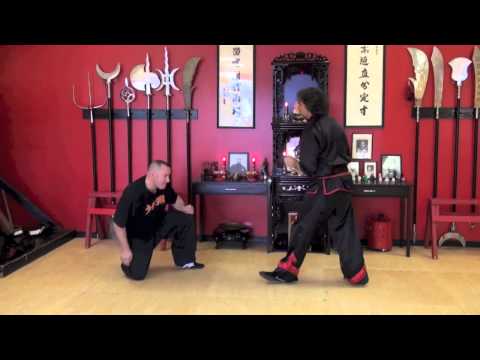
"Technique of the Week" Moi-Fa Kuen Applications Pt 2
Continued applications from Moi Fa Kuen-Grab/Punch into Hak Fu Jow and takedown
6 0
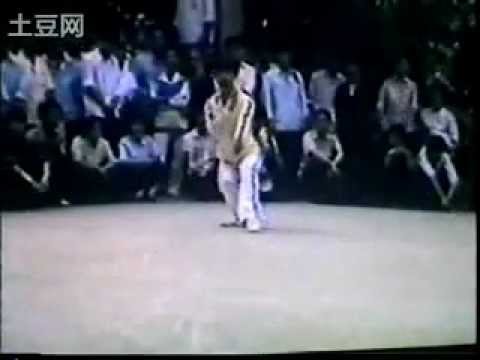
Yu Jia Quan
A traditional martial art from the Ziyang prefecture area of Sichuan province.
1 0

Nan Pai Kungfu, maestro José A. Rey García, Fo Jia Quan (佛家拳), Austria-2015.
Demostración de algunas técnicas del estilo Fo Jia Quan (佛家拳), una de las ramas de la Academia Wong Yi Man Nan Pai Wushu (國際黄宇文中國南派武術總館) creada por el Shifu Lian Tian Zhu (梁天柱, 1877-1972), quien tras largos años de estudio sintetiza la esencia del estilo Choy (蔡家), Li (李家), Hong (洪家) y Liu (刘家) en un sistema que sus seguidores se dignarían en nominar bajo los trazos del ideograma de Fo (佛). La profesora Miriam M. Vargas Iribar (柒級武士 – séptimo nivel de Wushu), ejecuta algunos fragmentos de esta legendaria corriente sureña (南派), honrando las trasmisiones de este notable preceptor que ha dejado -luego de una larga vida de entrega-, huellas imperecederas en la herencia pugilística de China.
14 0

FuXi Bagua Quan
Fúxī bāguà quán is a traditional martial art from Huaiyang county in Henan province. It has been practiced in that area since the beginning of the Qing dynasty. It can be traced back to a man named Liu Huai. He was born into a rich family and had studied several styles in his youth, even traveling to Cangzhou prefecture in Hebei province to study under famous masters in the area. After returning to Huaiyang he met a traveling Taoist priest who went by the name of "Wind" who he studied under for ten years learning the art of "Fuxi Bagua Quan". The style sets are organized around the Pre and Post Heaven Bagua, Five Elements, Heavenly Stems, Earthly Branches, etc. The style has generally been passed down to very few people, only in the Huaiyang area. Much of the original syllabus has been lost and today it is in danger of becoming extinct. P.S. Fuxi refers to the mythical Emperor Fuxi (29th century B.C.) who created the Pre-Heaven Bagua diagram and is thought to have lived in the Huaiyang area.
6 1
