Противотанковые ружья разных стран мира
Июль 29, 2016
Композиция "Airport Lounge — Disco Ultralounge" принадлежит исполнителю Kevin MacLeod. Лицензия: Creative Commons Attribution (https://creativecommons.org/licenses/by/4.0/).
Оригинальная версия: http://incompetech.com/music/royalty-free/index.html?isrc=USUAN1100806.
Исполнитель: http://incompetech.com/
91 46
26,334 просмотров

7 Самых Мощных и Опасных СНАЙПЕРСКИХ ВИНТОВОК
7 Самых Мощных и Самых Опасных СНАЙПЕРСКИХ ВИНТОВОК
В условиях старых добрых олдскульных войн 19 века любая рота солдат могла чувствовать себя в безопасности, просто удалившись на пару сотен метров от мушкетного огня. Это отлично работало до 1900-х годов, пока мир не услышал о снайперах. Виртуозные стрелки, о присутствии которых на поле боя узнавали только после потери бойца, сводили противника с ума своей непреклонностью и внезапностью, противопоставили ледяное спокойствие ажиотажу ближнего боя и перевернули известные прежде военные тактики с ног на голову. А конструкторы и техники помогали им в этом и к двадцать первому веку довели снайперские винтовки до совершенства. Сегодня снайпер может выйти в одиночку против танка или вертолёта. И как вы наверняка догадываетесь, размер имеет значение.
14400 1627

Самое необычное оружие Второй Мировой войны.
Эти образцы вооружения действительно мало известны, но несмотря на это некоторые из них применялись во время боевых действий.
1 1

необычные противотанковые орудия
89 55

Демонстрация немецкого противотанкового оружия
http://broneboy.ru/
Румыны демонстрируют действие немецкого противотанкового оружия пехоты 1939-1945 гг.
1. Подготовка и стрельба из Faustpatron (Panzerfaust) 60, 30.
2. Установка магнитной кумулятивной мины Haft-Hohlladung 3 (HHL3).
3. Применение бутылок с зажигательной смесью.
177 75

Самая крутая снайперская винтовка Украины не имеющая аналогов в мире 2017
Желающие поддержать канал Мастер-карт 5489681013792243 в Мастер Карт UAN в 5489688013792164 USD, желающих поддержать развитие канала Мастер карт 5489681013792243 в Мастер Карт UAN в 5489688013792164 USD.Впервые, винтовка была показана на выставке "Зброя та безпека 2016", проходившей в Киеве в октябре прошлого года. Название оружия состоит из названия модели (SNIPEX), указания калибра (.50 BMG) и указания возможного предназначения (RHINO HUNTER — "Охотник на носорогов").
Ствол из нержавеющей стали длиной 750 или 1100 мм плавающий, производство собственное, нарезы канала ствола исполняются методом дорнирования. Для гашения отдачи кроме мощного ДТК и амортизирующей вставки затыльника задней части шасси, играющей роль приклада с упором для руки стрелка, применена простая схема откатного механизма.
Ствол заключен в трубчатый кожух с вентиляционными отверстиями, на боковые поверхности которого (для большей устойчивости оружия) крепятся регулируемые сошки. На казенной части кожуха закреплен гребень с направляющей Picatinny rail для крепления оптического прицела.
Винтовка однозарядная, работает по принципу продольно скользящего затвора с массивной рукояткой, запирающего канал ствола на тринадцать боевых упоров. Выброс стреляных гильз происходит при откате затвора назад. Все это значительно сокращает время перезаряжания и упрощает его. Автоматический предохранитель расположен на спусковом крючке.
Общая длина винтовки составляет 1200 мм, прицельная дальность 2200-2500 метров в зависимости от длины ствола. Другие подробности пока не сообщаются.
Старт начала продаж оружия запланирован на 10.04.2017. Предзаказ доступен к оформлению. На момент публикации статьи, стоимость винтовки составляет 149500 гривень (около $5300).
2699 1040
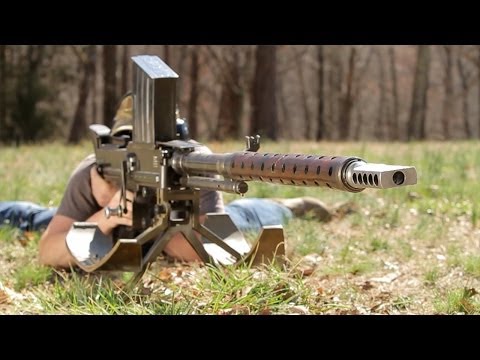
iMac vs 20mm Anti-Tank Rifle
Lahti 20mm Anti Tank Rifle vs iMac
Ditch the hipsterbucks and get your Black Rifle Coffee here: https://brcc.coffee/2rjdvS5
Click here to subscribe:
http://goo.gl/mZDvQ
Twitter: http://www.Twitter.com/RichardRyan
Facebook: http://www.Facebook.com/RichardRyan
Instagram: http://www.Instagram.com/RichardRyan
Vine: http://www.Vine.co/RichardRyan
Click here for my Second channel Guns:
http://goo.gl/khgkiF
For viewers who want more than just a YouTube video:
http://fullmag.com
The shirt I'm wearing in the video can be found here:
http://www.EndoApparel.com
The Lahti L-39 is a Finnish 20 mm anti-tank rifle used during the Second World War. It had excellent accuracy, penetration and range, but its size made transportation difficult. It was nicknamed "Norsupyssy" ("Elephant Gun"), and as tanks developed armour too thick to be penetrated by even this large, powerful rifle, its uses switched to long range sniping, tank harassment and with the L-39/44 fully automatic variant, an improvised anti-aircraft weapon.
The rifle is a semi-automatic, gas operated weapon with the piston located beneath the barrel and ammunition feed from detachable top-mounted magazine with bottom ejection for the spent cartridges. To reduce recoil, the rifle is equipped with a five hole muzzle brake and a padded leather recoil pad.
The iMac is a range of all-in-one Macintosh desktop computers designed and built by Apple Inc. It has been the primary part of Apple's consumer desktop offerings since its introduction in 1998-08 (shipped; intro 1998-05), and has evolved through six distinct forms.
In its original form, the iMac G3 had a gum-drop or egg-shaped look, with a CRT monitor, mainly enclosed by a colored, translucent plastic case, which was refreshed early on with a sleeker design notable for its slot-loaded optical drive. The second major revision, the iMac G4, moved the design to a hemispherical base containing all the main components and an LCD monitor on a freely moving arm attached to it. The third and fourth major revisions, the iMac G5 and the Intel iMac respectively, placed all the components immediately behind the display, creating a slim unified design that tilts only up and down on a simple metal base. The fifth major revision shared the same form as the previous model, but was thinner and used anodized aluminum and a glass panel over the entire front. The newest iMac uses a different display unit, omits the SuperDrive, and uses different production techniques from the older unibody versions. This allows it to be thinner at the edge than older models, with an edge thickness of 5.9mm (but the same maximum depth). It also includes a dual microphone setup, and includes SSD or HDD storage, or an Apple Fusion Drive, a hybrid of solid state and hard disk drives. The latest model was announced on October 23, 2012, with the 21.5" version released on November 30 and the 27" version released in December; these were refreshed on September 24, 2013, with new Haswell processors, faster graphics, faster and larger SSD options and 802.11ac WiFi cards.
79531 12169

История пистолета Стечкина, почему Стечкин лучший пистолет?
История создания пистолета Стечкина, автоматический пистолет Стечкина, который полюбился многим спецслужбам, и отдельным людям, почему это оружие до сих пор считают надежным, практичным, и удобным для ближнего боя, как создавали лучший пистолет всех времён. 10 интересных фактов про пистолет Стечкина (АПС) которых вы не знали.
https://www.youtube.com/channel/UCdYcZPdPiTQ-Ey2nOriJqvA
музыку беру отсюда https://player.epidemicsound.com
5109 487
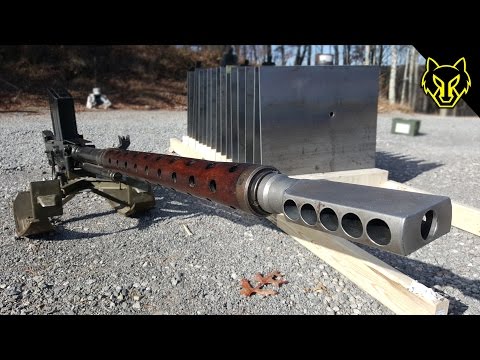
20mm Anti Tank Rifle vs 16 Steel Plates!
20mm Anti Tank Rifle vs 16 Steel Plates!
Ditch the hipsterbucks and get your Black Rifle Coffee here: https://brcc.coffee/2rjdvS5
FULLMAG is finally on Facebook and Instagram!!!
Facebook: http://www.facebook.com/FULLMAG.Official
Instagram: http://www.instagram.com/FULLMAG.Official
My personal pages are here:
Facebook: http://www.Facebook.com/RichardRyan
Instagram: http://www.Instagram.com/RichardRyan
Click here for my Second channel Guns:
http://goo.gl/khgkiF
For viewers who want more than just a YouTube video:
http://fullmag.com
The Lahti L-39 is a Finnish 20 mm anti-tank rifle used during the Second World War. It had excellent accuracy, penetration and range, but its size made transportation difficult. It was nicknamed "Norsupyssy" ("Elephant Gun"), and as tanks developed armour too thick for the Lahti to penetrate its uses switched to long range sniping, tank harassment and with the L-39/44 fully automatic variant, employment as an improvised anti-aircraft weapon.
Aimo Lahti had doubts about the original idea of a 13 mm anti-tank machine gun and started working on a 20 mm design. Officers who wanted smaller calibre anti-tank weapons believed that the muzzle velocity of 20 mm shells was insufficient to penetrate armour and a weapon with a higher rate of fire and in a smaller calibre would prove useful. As a result, Lahti designed two competing anti-tank weapons: a 13.2 mm machine gun and a 20 mm rifle. After test firing both weapons in 1939, they found that the 20 mm rifle displayed better penetration.
The rifle is a semi-automatic, gas operated weapon with the piston located beneath the barrel and ammunition feed from detachable top-mounted magazine with bottom ejection for the spent cartridges. To reduce recoil, the rifle is equipped with a five hole muzzle brake and a padded leather recoil pad. The barrel had a wooden jacket as to allow transportation after firing.
During the Winter War (1939–1940) Finland lacked anti-tank weaponry. Only two 20 mm rifles and a few 13.2 mm machine guns made it to the front, where the 13.2 mm machine guns were found to be ineffective and unreliable while the larger 20 mm rifles proved successful against Soviet armour. Because of this, Finland finally settled on the 20 mm design and started production.
The gun was also widely used in the Cold Charlie counter-sniper technique, where the Finns would use a mannequin posing as an officer sloppily covering himself. Soviet snipers would fire upon the mannequin, and the Finns would then return fire at the Soviet snipers with the Lahti L-39.
Several of the rifles remained in service after World War II serving as an anti-helicopter weapon, while many others were sold to collectors, mostly in the United States. Today the rifles, especially those in working condition, are quite rare and highly sought after. Some deactivated weapons (with a steel bar welded into the chamber) have been reactivated due to their value. Ammunition is rare. Often they are rechambered to.50 BMG to lower the cost of use. In the United States of America, civilian ownership remains possible, depending on state and federal laws. Because the weapon fires rounds larger than.50 calibre, it is considered a destructive device and is subject to the 1934 National Firearms Act. Civilian ownership is dependent on compliance with this law and whether one's state law prohibits civilian ownership of destructive devices.
Users found the L-39 to be heavy and difficult to move in the battlefield. Even its magazine weighed almost two kilograms. The magazines had a covered viewing slit on the right side to indicate the number of rounds left in the magazine, and a 15-round magazine was later developed for anti-aircraft use.
The whole weapon weighed some 50 kilograms and it was usually towed by horses, but when stripped down could be carried by several men. The rifle had adjustable iron sights calibrated between 200 and 1, 400 meters and was equipped with unusual dual bipod, with two sets of legs, one with spikes for use on hard ground and the other with skids for use on softer ground or snow.
In the field, a two-man team was assigned to the gun to move and fire it. Some rifles were abandoned in the heat of battle, but they were easy to replace. By the end of the war over 1900 L39s had been manufactured by VKT (Valtion Kivääritehdas, "State Rifle Factory", modern day Patria) and put in the field.
92755 13730

ПТРД. Противотанковое ружьё Дегтярёва у защитников Новороссии !
ПТРД Противотанковое ружье Дегтярёва, на службе у защитников Новороссии! 1942 года выпуска, броник не спасет.
PTRD. The anti-tank gun of Dekterev on service of defenders of Novorossiya! The bullet-proof vest won't rescue!
374 240

Японское птр Kawamura Type 97. Обзор.
Обзор Японского автоматического ПТР Kawamura Type 97 — надеюсь расскажу что то новое.
173 41
